I Walked Nearly 30,000 Steps at My First Las Vegas Market. That Wasn’t My Biggest Mistake.
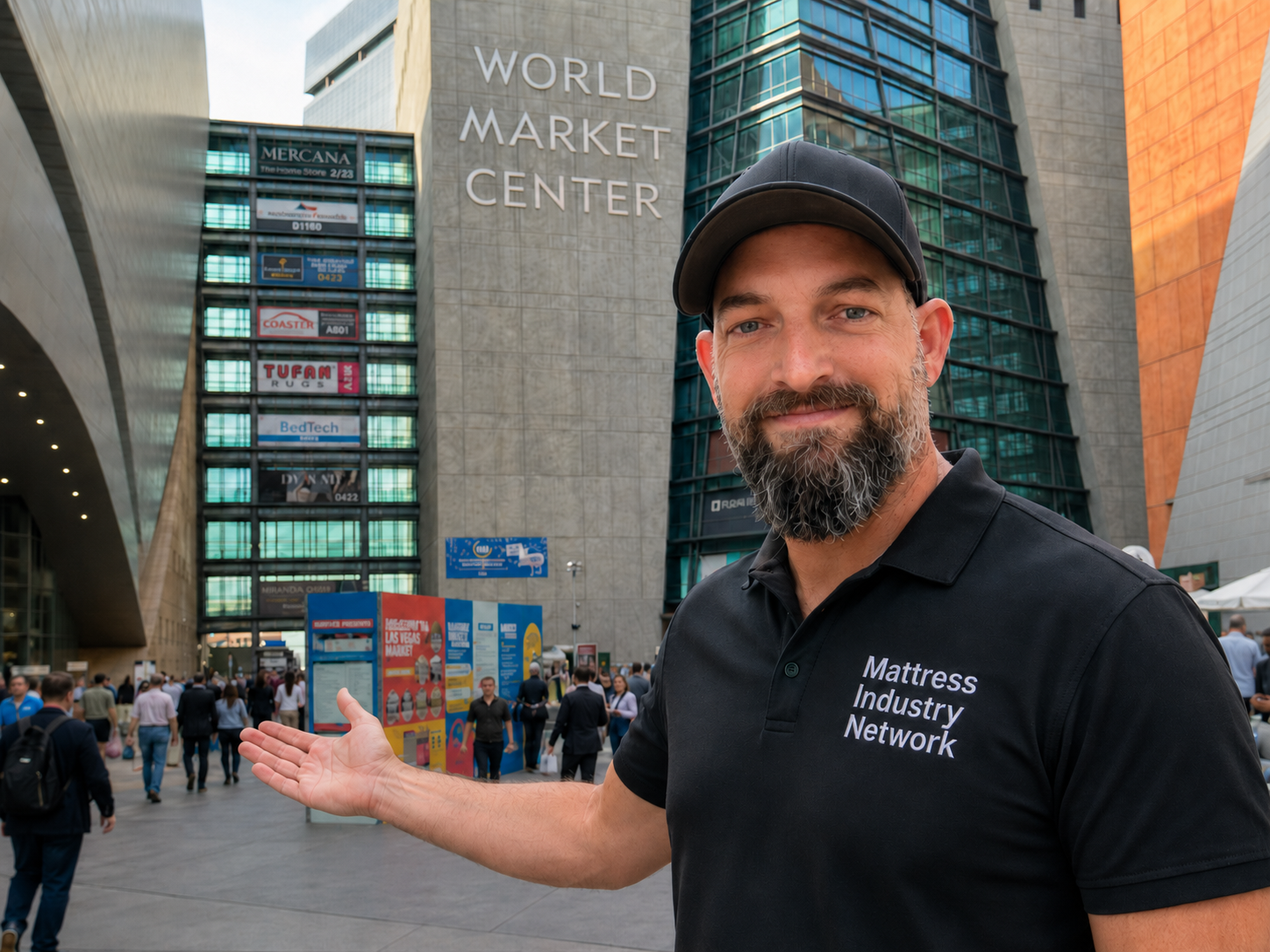
Las Vegas Summer Market returns July 26–30, 2026, and thousands of retailers, manufacturers, sales representatives, suppliers, and industry professionals will once again descend on the World Market Center.
I still remember my first Market.
I had no idea there were crossover paths connecting the buildings on certain floors. Every time I wanted to move from one building to another, I took the elevator or escalator all the way down to the first floor, walked across, and then went all the way back up again.
Over and over.
One day, I walked nearly 30,000 steps.
By the time I called my wife that night, I was completely exhausted. I told her Market was crazy. I could not understand how everyone did this several times a year without needing a week to recover.
At the next Market, a sales representative casually showed me where to cross between the buildings without returning to the ground floor.
My mind was blown.
I had spent an entire Market taking the longest possible route because I did not know what I did not know. Once someone showed me the crossover floors, my steps were practically cut in half.
That is a funny story now, but it also describes how many retailers approach Market.
They work harder than necessary, walk farther than necessary, sit through more presentations than necessary, and collect more catalogs than they will ever read—all because nobody has shown them what Market is actually for.
Market Is Not a Shopping Trip
The standard Market advice is always the same.
Wear comfortable shoes.
Drink water.
Make appointments.
Bring business cards.
Do not party too hard.
That advice is not wrong, but it is not especially useful either. Nobody builds a better mattress store because they remembered to bring comfortable shoes.
The real question is this:
Why are you going to Market?
If the answer is simply to see what is new, you may return home with a camera roll full of mattresses, a bag full of brochures, several vague promises to follow up, and no meaningful improvement to your business.
Market is not valuable because there are more products in one place.
Market is valuable because the people who can help you solve problems are in one place.
That is a major difference.
Your Store Probably Does Not Need More Mattresses
Independent mattress retailers rarely suffer from a lack of products.
Most of us already have plenty of beds. In many cases, we have too many.
We do not need another mattress just because it has a different cover, a new foam name, an extra inch of height, or a story somebody created in a marketing meeting.
What we need are better answers to the problems our customers bring into the store.
Maybe you need a stronger option for a heavier customer who has already worn out three mattresses.
Maybe you need a legitimate cooling story that does not fall apart the moment an educated customer starts asking questions.
Maybe you need a better solution for couples with dramatically different comfort preferences.
Maybe your market is asking for natural or certified organic products, but you do not currently have a line you trust.
Maybe you need a product that can compete with the online brands customers keep mentioning.
Maybe your current vendors are creating delivery problems, warranty headaches, pricing conflicts, or gaps in your assortment.
Those are reasons to go to Market.
Do not begin by asking, “What is new?”
Begin by asking, “What customer problem am I currently unable to solve?”
That question will take you to better showrooms, create better conversations, and keep you from filling your floor with products that do not have a clear job.
The Best Thing You Can Find at Market Is Not a Product
It is a person who answers the phone when something goes wrong.
A good vendor relationship can help you save a sale, locate a product, solve a warranty issue, explain a technical detail, rush an order, train a salesperson, improve your merchandising, or identify a product that better fits a customer’s needs.
A weak vendor relationship usually looks good until you need something.
Every manufacturer will tell you how much they value independent retailers. Market is where you begin figuring out which ones actually mean it.
Do they ask questions about your business, or do they immediately begin showing you products?
Do they understand your market?
Do they know what is already on your floor?
Are they interested in helping you build a profitable assortment, or are they primarily interested in getting another slot?
Can they explain which customers their products are designed to serve?
What happens when there is a warranty claim?
What happens when an order is late?
What happens when a major online retailer begins advertising the same product at a price you cannot match?
Who will help train your staff after Market?
Who owns the relationship once the order is written?
The answers matter more than the showroom lighting.
Do Not Confuse Hospitality With Partnership
Market showrooms are designed to make retailers feel good.
There may be food, drinks, parties, gifts, private dinners, celebrity appearances, elaborate displays, and enthusiastic presentations.
Enjoy it. This industry is built on relationships, and there is nothing wrong with having a good time.
But do not confuse being entertained with being supported.
The company that buys dinner is not automatically the company that will help you solve a difficult customer issue six months later.
The salesperson who makes you feel important in Las Vegas is not necessarily the salesperson who will remain engaged after the opening order ships.
Hospitality can begin a relationship. It cannot replace one.
A real partnership should make your store stronger after everyone leaves Las Vegas.
Go to Market Carrying Problems, Not an Empty Order Pad
Before leaving for Las Vegas, I would make a list of the problems occurring inside the business.
Not a list of products I want to see.
A list of problems.
Where are customers walking because we do not have the right solution?
Which products are difficult for our salespeople to explain?
Which price points are overcrowded?
Where are our margins weak?
Which vendors create the most service issues?
What are customers asking for that we cannot currently provide?
Which products look good on paper but do not sell?
Which products sell but create problems after delivery?
Then I would take those questions into every relevant showroom.
This changes the entire conversation.
Instead of listening passively to a rehearsed product presentation, you can say:
“I have customers coming in with this specific problem. How would you solve it?”
A strong vendor will ask follow-up questions.
A weak vendor will point toward whatever mattress they are currently trying to sell.
Pay Attention to How Vendors Think
Products will change.
Covers will change. Names will change. Foams will change. Collections will be redesigned. Pricing will move. Companies will merge. Representatives will change territories.
What matters is whether the vendor understands retail.
Can they help you explain the product in language a customer understands?
Can they articulate why the product deserves space on your floor?
Do they understand that an independent retailer cannot display every mattress they manufacture?
Are they willing to recommend that you do not bring in a product when it duplicates something you already have?
The best representatives I know are not merely trying to get more floor placements. They are trying to help the retailer build the right floor.
Sometimes the most valuable thing a vendor can tell you is, “You do not need this.”
That kind of honesty builds trust.
Leave Room for Conversations You Did Not Schedule
Appointments are important, particularly when you need meaningful time with a vendor. But scheduling every minute of every day can defeat one of Market’s greatest advantages.
Some of the most valuable conversations happen in hallways, elevators, restaurants, showrooms, hotel lobbies, industry meetups, or while walking between appointments.
You run into another retailer and learn what is working in their store.
A manufacturer introduces you to someone who can solve a problem you have been dealing with for months.
A casual conversation reveals that several other dealers are experiencing the same issue you thought was unique to your business.
You hear about a product, service, technology, employee strategy, or marketing idea you would never have searched for on your own.
Market creates collisions.
Do not schedule your days so tightly that you eliminate every opportunity for one to occur.
Talk to Other Store Owners Honestly
Retailers sometimes approach Market as if every conversation is a competition.
They exaggerate their sales. They pretend everything is going great. They refuse to discuss problems because they do not want to appear weak.
That is a missed opportunity.
Some of the best information at Market comes from other store owners who are willing to tell you the truth.
Ask them what they brought in last Market that actually sold.
Ask what they regret buying.
Ask which companies supported them when there was a problem.
Ask which product stories connected with customers and which ones sounded better in the showroom than they performed on the sales floor.
Ask what they are changing in their stores.
You do not have to share sensitive financial information or reveal every competitive advantage. But honest conversations between independent retailers can save both parties from expensive mistakes.
Do Not Judge a Product Only Inside the Showroom
Everything looks better at Market.
The lighting is better. The displays are cleaner. The beds are perfectly dressed. The representatives know exactly what to say. The product is surrounded by the full brand story.
Your store may be a very different environment.
Before committing, picture the product on your floor.
Where will it go?
What will sit next to it?
What customer will your salesperson bring to it?
What existing product will it replace?
How will your team explain it in less than a minute?
Can the value be understood without the Market display, the product engineer, the brand executive, and a twenty-minute presentation?
A product that requires the entire showroom experience to make sense may be difficult to sell after it reaches your store.
Do Not Let Market Excitement Make Your Decisions
Las Vegas creates urgency.
Show specials expire. Territories are described as limited. Products are called revolutionary. Everyone is excited. You are surrounded by people writing orders.
That environment can make an average opportunity feel extraordinary.
Take notes. Ask questions. Request the information you need. But remember that you are the one who must live with the decision when the product arrives.
Your employees must learn it.
Your customers must understand it.
Your delivery team must handle it.
Your warehouse must store it.
Your company must service it.
Your cash must pay for it.
The vendor gets to leave the showroom. You have to sell the mattress.
The Goal Is Not to Come Home With More
The goal is to come home better.
Better relationships.
Better solutions.
Better product knowledge.
Better clarity about your assortment.
Better understanding of where the industry is going.
Better connections with other store owners.
And perhaps a shorter route between Buildings A, B, and C.
I will always laugh about walking nearly 30,000 steps because I did not know about the crossover floors. But the larger lesson has stayed with me.
Experience is often nothing more than finally learning where the shortcuts are.
Las Vegas Market is full of them—not only physical shortcuts, but relationship shortcuts. The right person can help you avoid a bad product decision, solve a customer problem, find a better supplier, improve your sales presentation, or see an opportunity you would have missed on your own.
So go see the new products.
Walk the showrooms.
Attend the events.
Enjoy Las Vegas.
But do not measure the success of Market by how many beds you saw, how many dinners you attended, how many steps you walked, or how many orders you wrote.
Measure it by the number of relationships you strengthened and the number of customer problems you are better equipped to solve when you return home.
That is what Market is really for.